
Application- specific integrated circuit - Wikipedia. A tray of application- specific integrated circuit (ASIC) chips. An application- specific integrated circuit. Cornell Notes Template Evernote Vs Onenote. Windows Vista Service Pack 1 Cd Iso on this page.
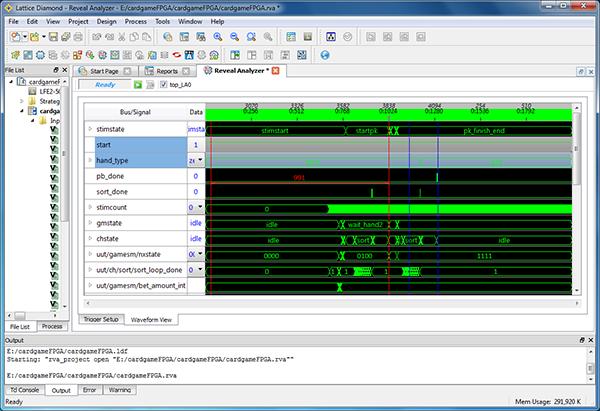
Designing logic for CPLDs and FPGAs is very similar. Consult UC Berkeley’s EECS150 lab guides () for tons of detailed tutorials. Soldering TQFP packages with an iron isn’t too bad, actually. Using lots of flux makes the job quick and clean. CPLDs are very small, ultra low-cost FPGAs, and are definitely a great choice for a digital logic circuit. The performance gained by implementing a task-specific datapath on a CPLD and using a processor as control is incredible.
The tools have a steep learning curve, but are indeed very powerful. After learning how to use programmable logic properly, microcontrollers seem overused, and often unnecesary for many designs. Other comapnies still making CPLDs include Actel and Cypress. Quicklogic still makes some fpga/cpld hybrid type things.
You should also mention the older and smaller PLD/PAL devices. TI still makes them, Lattice sells some, and Diodes Inc. Looks like they picked up the old ICT PEEL devices. IMHO, Using a CPLD to replace something like an 8-bit latch or a simple mux is usually a waste of money.
CPLDs are great at doing wide input functions, things like fast address decoders and counters, small state machines, picking up a few spare gates here and there, however, the registers inside them are relatively expensive because each one comes with a boatload of logic in front of it. 5V CPLDs can be a bit power hungry, especially really old stuff like bipolar 22V10s. Don’t burn yourself like I did:-) Lattice has a decent selection of 5V parts which they acquired from AMD a long time ago.
There are now some cool analog/digital CPLD hybrid things around like cypress PSoc and Lattice POWR chips. I just finished doing a design with a Lattice ispMACH4 part. Their design tools are free, too: You do need to buy a.
I used to look at FPGA’s and cpld’s in awe like this article, but over the years I’ve come to the conclusion that they are pretty worthless for final production designs. They add to bill of materials costs, they suck up a lot of power, and with new PIC’s implementing the peripheral pin select feature, software programmable re-routing of pins is no longer a problem. If you can design your project to only use a microcontroller, you can constantly beat a cpld/fpga design over the head with lower power consumption and lower bom cost. The only time i’d consider a fpga/cpld is if i needed something to interface at maximum speeds and where cost, power consumption, and board space is no longer an issue. However, as microcontrollers continue to get faster and integrate more high speed interface peripherals, even that reason may become dubious at some point.
LOGIC DOUBLING™? SEE FOR YOURSELF! The Atmel EPLD product line comprises two major categories: simple programmable logic devices (SPLDs) and the higher density complex programmable logic devices (CPLDs). Atmel SPLDs: Industry Standard The Atmel SPLD products consist of industry standard 16V8 and 22V10s in a variety of voltage and power-saving options. Atmel offers low-voltage, zero-power and quarter power versions as well as our proprietary 'L' automatic power down low-power devices including the Battery Friendly ATF22LV10CQZ. All popular packages are supported in addition to the Atmel-only, TSSOP package -- the smallest package offered for any SPLD device. Propellerhead Reason 4 Full Free Download more. All versions are EE-based for high-reliability and easy re-programming and are supported by all popular third party programmers.